sexta-feira, 18 de outubro de 2013

Dingo


- Dingo -


Kingdom: Animalia
Phylum: Chordata
Class: Mammalia
Order : Carnivora
Family: Canidae
Genus : Canis
Species : C. lupus
Subspecies : C. liter. dingo

( Canis lupus dingo ) is a subspecies of wolf, as well as the domestic dog originated in Asia and is currently in the wild in Australia and Southeast Asia . The origin of Dingos remains uncertain but is believed to result from an early domestication of the wolf. Dingoes weigh between 10-24 pounds and have by the short and yellowish . Unlike dogs, dingos only breed once a year , do not bark and have more developed canine teeth . Dingoes and do not form packs or live alone or in small family groups .
Dingoes arrived in Australia about 4000 years ago , brought by Austronesian navigators , and not with the first Aborigines . Spread rapidly across the Australian continent and is thought to have significantly affected the ecosystem , contributing to the recession of carnivorous marsupials ( already in decline ) . With the arrival of European settlers and the flocks of sheep , the dingoes began to be persecuted and hunted as a threat , as happened with the Tasmanian tiger , which was extinguished . In the years of the 1880s built up a barrier of about 8500 km in length , with the goal of keeping away from the southeast Australian dingoes , which focused farms ( farms ) , and protect the herds . At the time , it was the largest structure ever built by man .
They feed on small animals , such as Red Kangaroo , Wallaby , European rabbit and sometimes can feed cattle .


 Geographical distribution of the dingos


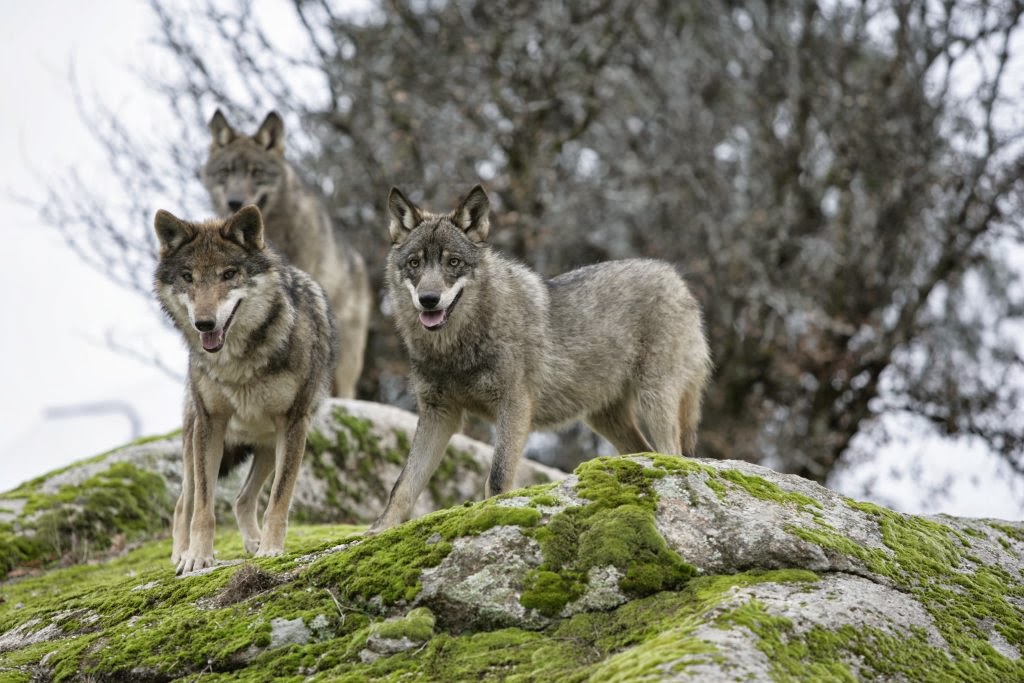
Iberian wolf

Iberian wolf

Popular Name: Iberian Wolf.
Scientific Name: Canis Lupus Signatus
Geographical Distribution: North of the Iberian Peninsula.
Natural Habitat: Forests.
Eating Habits: The food is very varied, depending on the presence or absence of wild prey and various types of grazing present in each region. The main wild prey of the wolf is the wild boar, roe deer and deer, and domestic preys are the most common sheep, goat, horse and cow. Also occasionally kill and eat dogs and harnesses corpses lying.
Size: Length: 1,10 m to 1,40 m(without the tail.)
         Height: 70cm
         Weight: 25 kg to 40 kg
Gestation period: About 2 Months.
Number of pups: 3 to 8
Average lifetime: Live up to 15 years.
Conservation status of the species: The causes of the decline of the wolf are your direct persecution and extermination of their wild prey. The decline is now compounded by the fragmentation and habitat destruction and the increasing number of stray dogs / feral.


Curiosities about the Iberian Wolf:

  • It is estimated that live in Iberia between 1500 to 2000 wolves.       
  • Your hair has many colors, they are all mixed: white, black, gray, gray, ocher and brown.
  • In winter, it is more hairy (to better combat the cold). In summer, the Iberian wolf has less hair and this is another short one (thus supporting heat better!).

quinta-feira, 17 de outubro de 2013

Jaguars

Jaguars


Popular Name: Jaguar
Scientific Name: Panthera onca

Geographical Distribution: Currently is officially extinct in the United States. It is very rare in Mexico, but can still be found in Latin America, including Brazil.
Natural Habitat: Occurs in various types of habitats, from forests like the Amazon and the Atlantic, even in open environments such as the Pantanal and Cerrado.
Eating habits: Deer, monkeys, tapirs, birds, reptiles, amphibians, fish, small rodents, domestic animals. The Jaguar can survive feeding on any animal, from insects to herbivores.
Size:

  • Length (including the tail): 160 cm to 260 cm;
  • Height: 68 cm to 76 cm.
  • Weight: can reach 135 kg.
Gestation period: Gestation is 93-105 days.
Number of pups: 1 or 2
Average lifetime: 20 years
Conservation status of the species: Habitat destruction coupled with poaching, mainly due to the alleged economic harm caused to the creations of domestic animals, causes the populations have been drastically reduced.
The species is classified as vulnerable.


8 curiosities about the jaguar:

1. The jaguar, also known as Jaguar , is the third largest cat in the world behind the tiger and the lion, and the largest on the American continent .

2 . The Jaguars have jaws so strong that their bites can even break bones and tortoise shells . The bite of the Jaguars is twice more powerful than a lion !

3 . Though feared , Jaguars usually flee from humans . There are rare reports of attacks this cat to man and when they occur, are usually related to the defense of their young.

4 . In ancient civilizations of Central America and South America, the jaguar is considered a symbol of strength .

5 . The Jaguars puppies are born blind and helpless , needing the protection of the mother for about two years to learn to hunt and they can avenge themselves.

6 . The Jaguars were found in the western and southern United States , including Texas, California, Arizona and New Mexico . However , the feline was quickly eliminated from the country , and very few sightings have been recorded since the 1960s .

7 . " Jaguar " comes from the Tupi ya'wara term , and can be translated as " beast " and even " dog " , since the term was used by Indians to refer to any " beast " before the arrival of Europeans .

8 . The jaguar may be up to a week without food but can eat up to 20 kg of meat in a single day .